The problem
The bank received a lot of negative feedback from customers who used old version of the service. The management decided to remake the platform, taking into account the solution of past problems and modern trends in interface design.
My role
- Analysis of the audience and the existing interface and the subject of errors and UX mistakes
- Change the structure for a more relevant and convenient presentation of data
- Create a new platform UI design
The process
User research
I started with research the problems and user behaviour in two directions:
- Made a portrait of users, their behaviour and devices info through Google Analytics
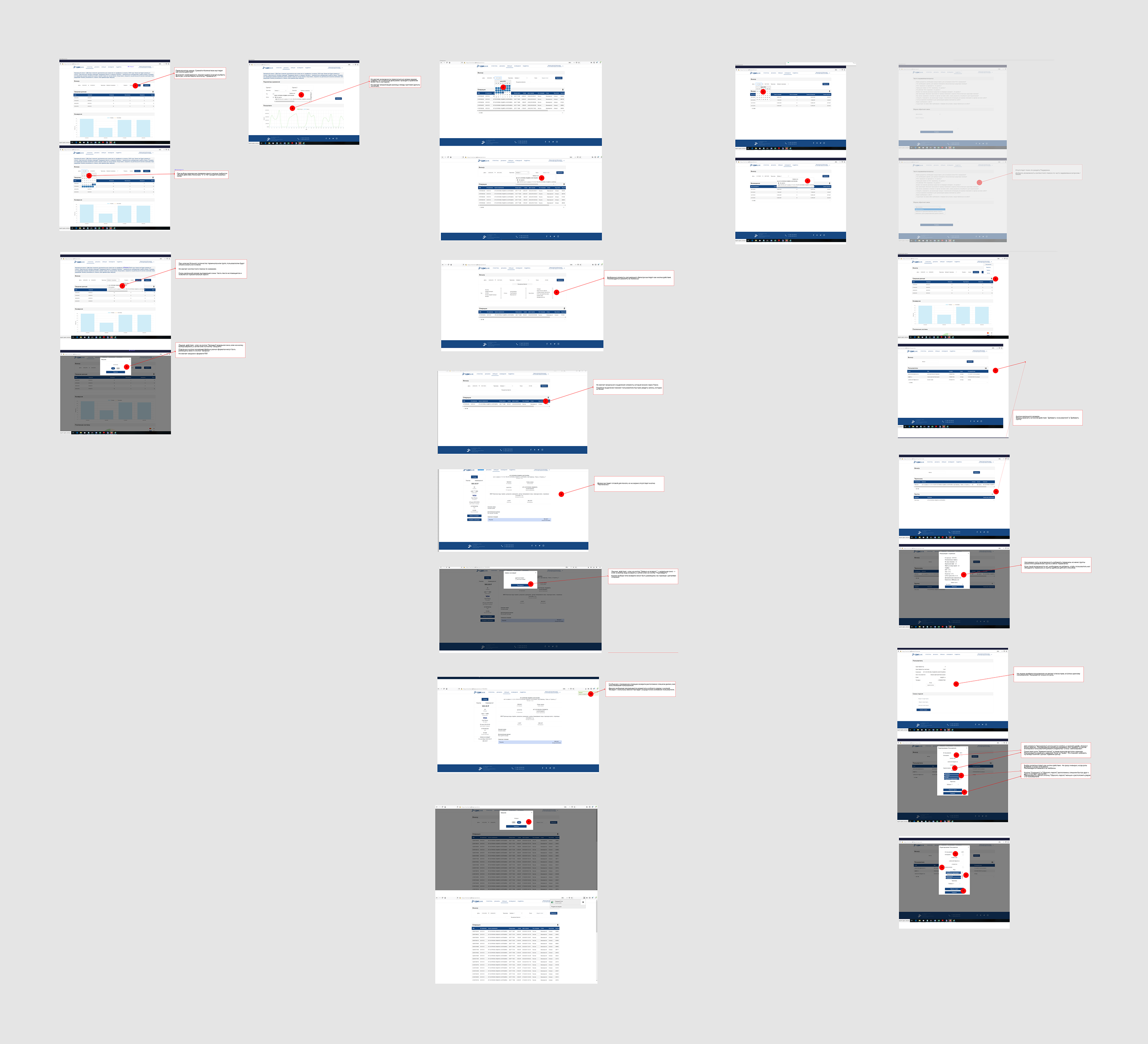
- Made research of all the screens and simulated main patterns of behaviour within the existing version of the interface.
As a result, I found problem points which helped me to develop UX vision for the new UI.
Prototyping
I created 3 different prototypes:
1. Old UI structure and widgets (left sketch)
2. New structure and classical dashboard view (right sketch)
3. Compromise variant with new UX structure and widgets but with old screen grid.
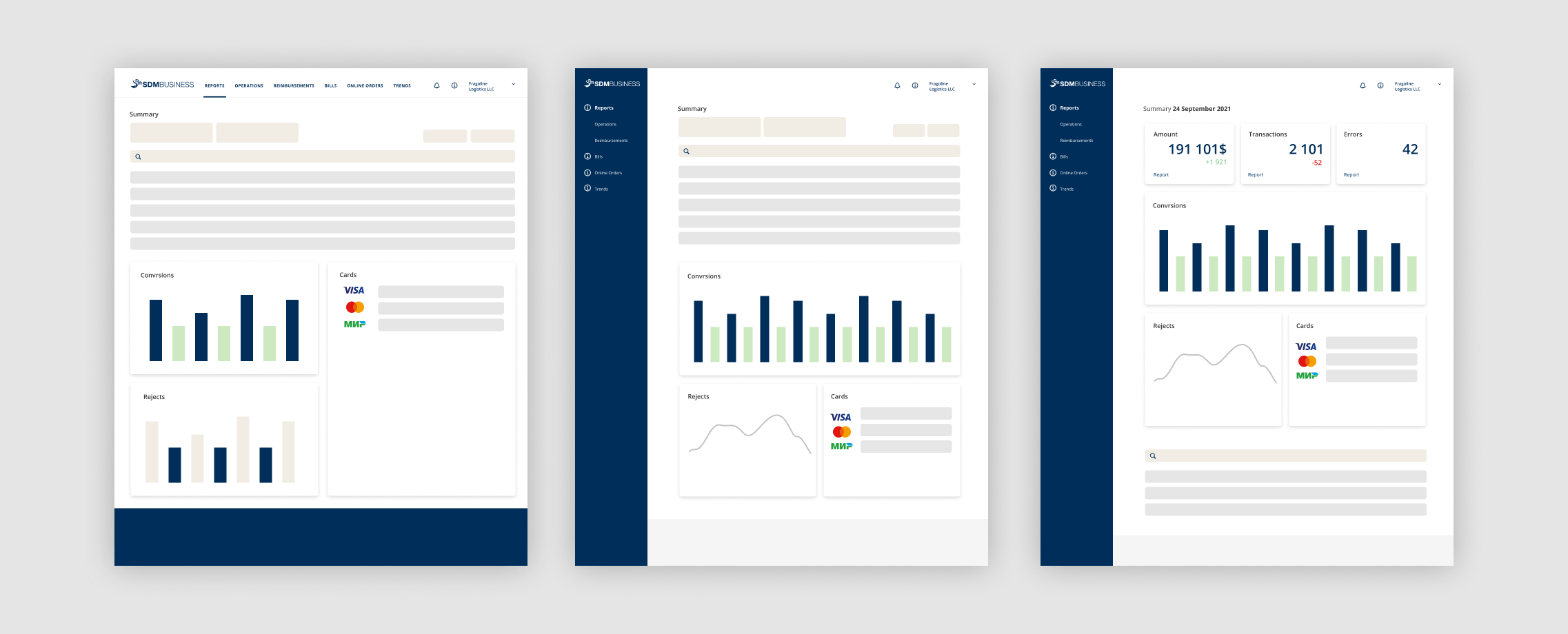
During UI tests most of the users choosed version 3. We decided move forward with this concept but in near future upgrade it to classical dashboard view.
New UI design
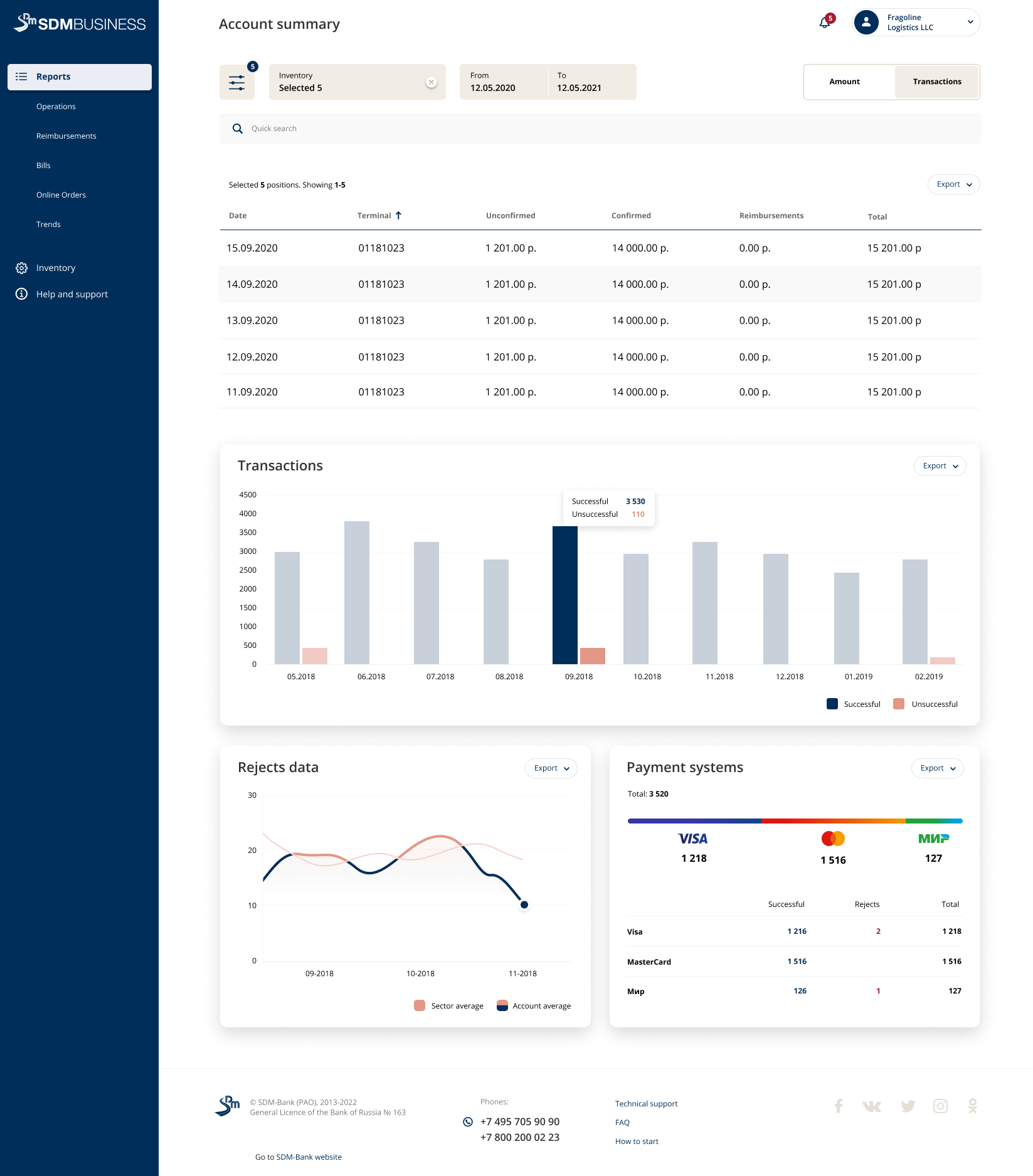
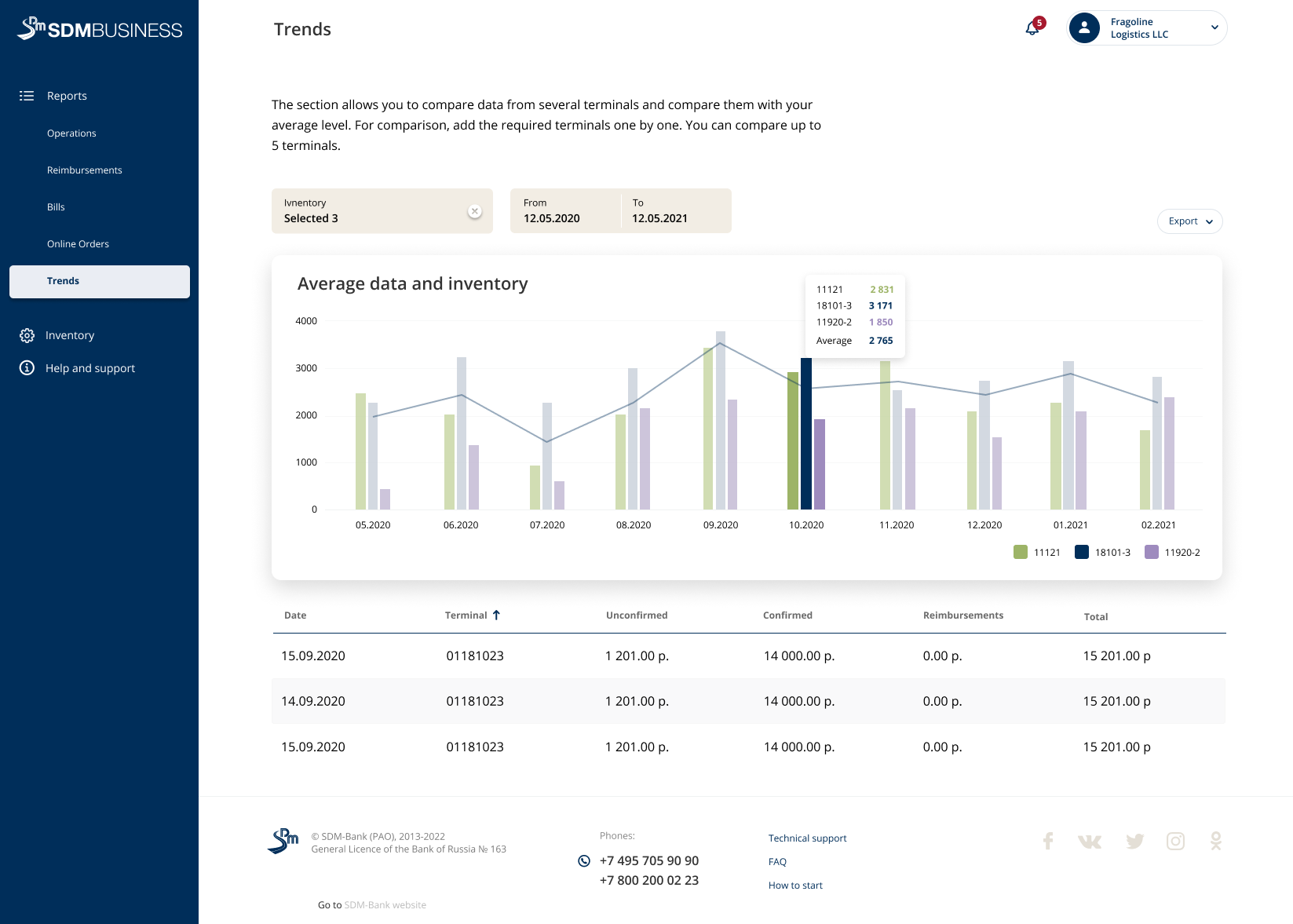
Data visualisation
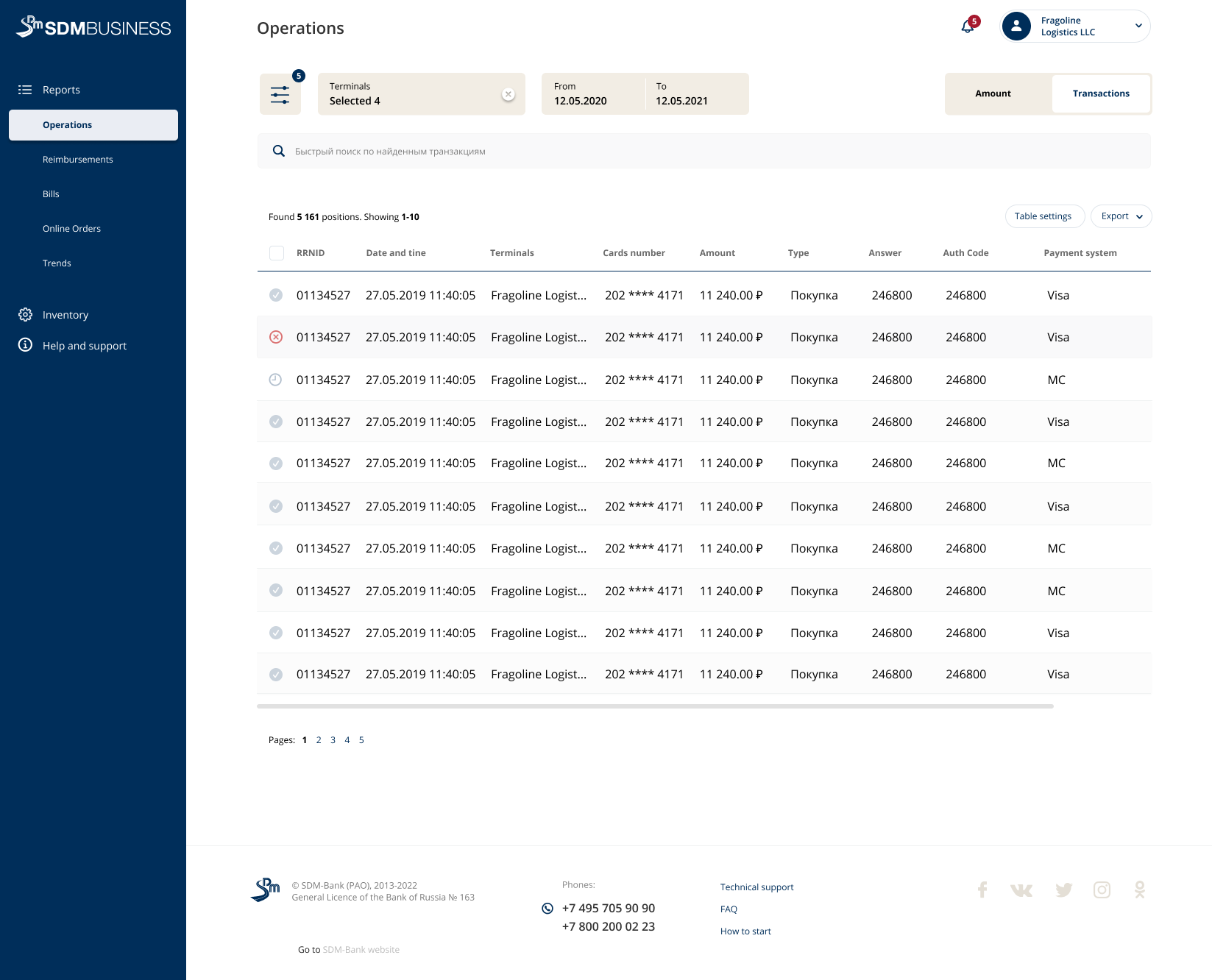
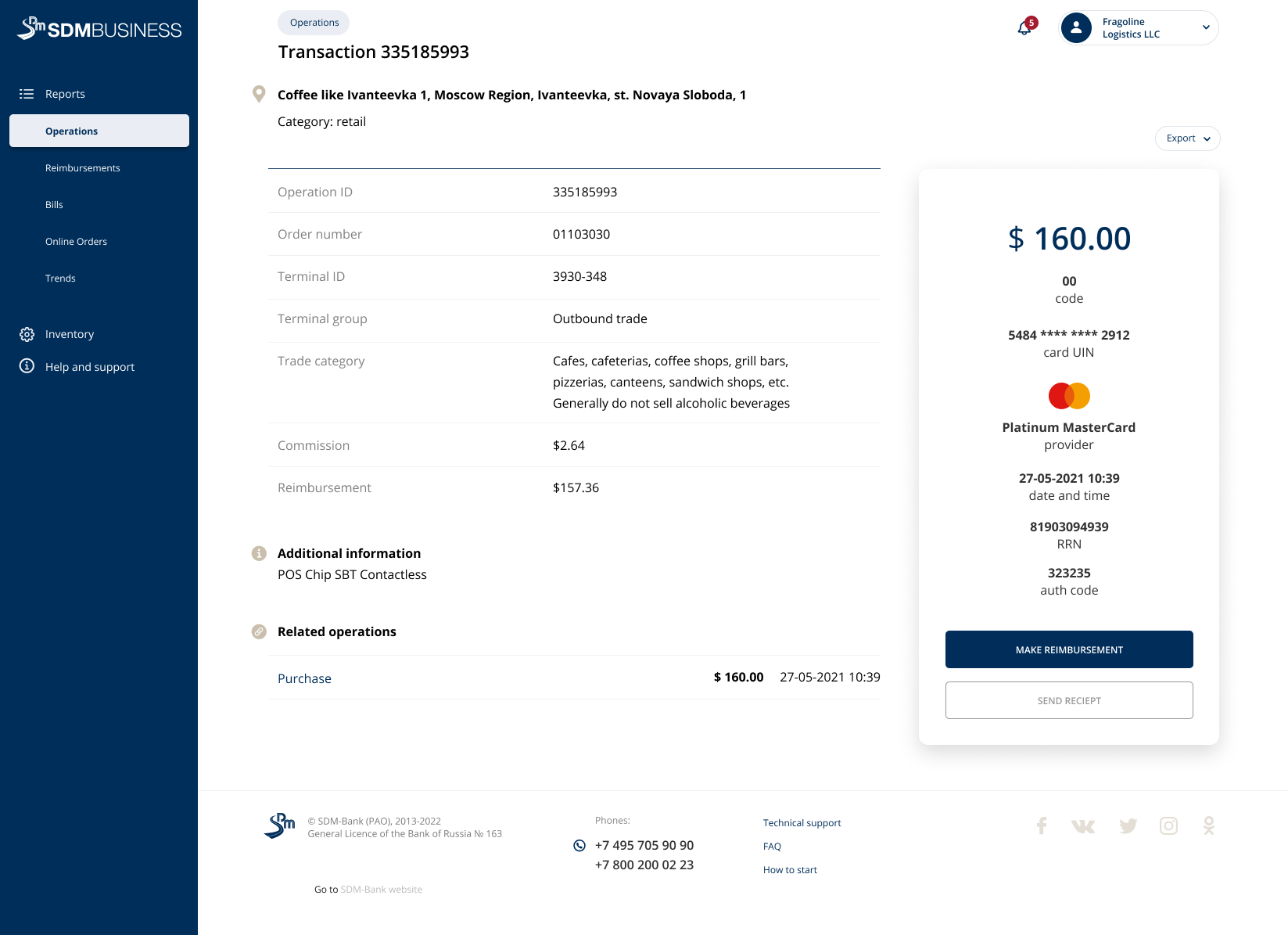
There are a lot of merchant data in typical account. I made UI that allows clients to show everything in a structured and simple way.
Content strategist role
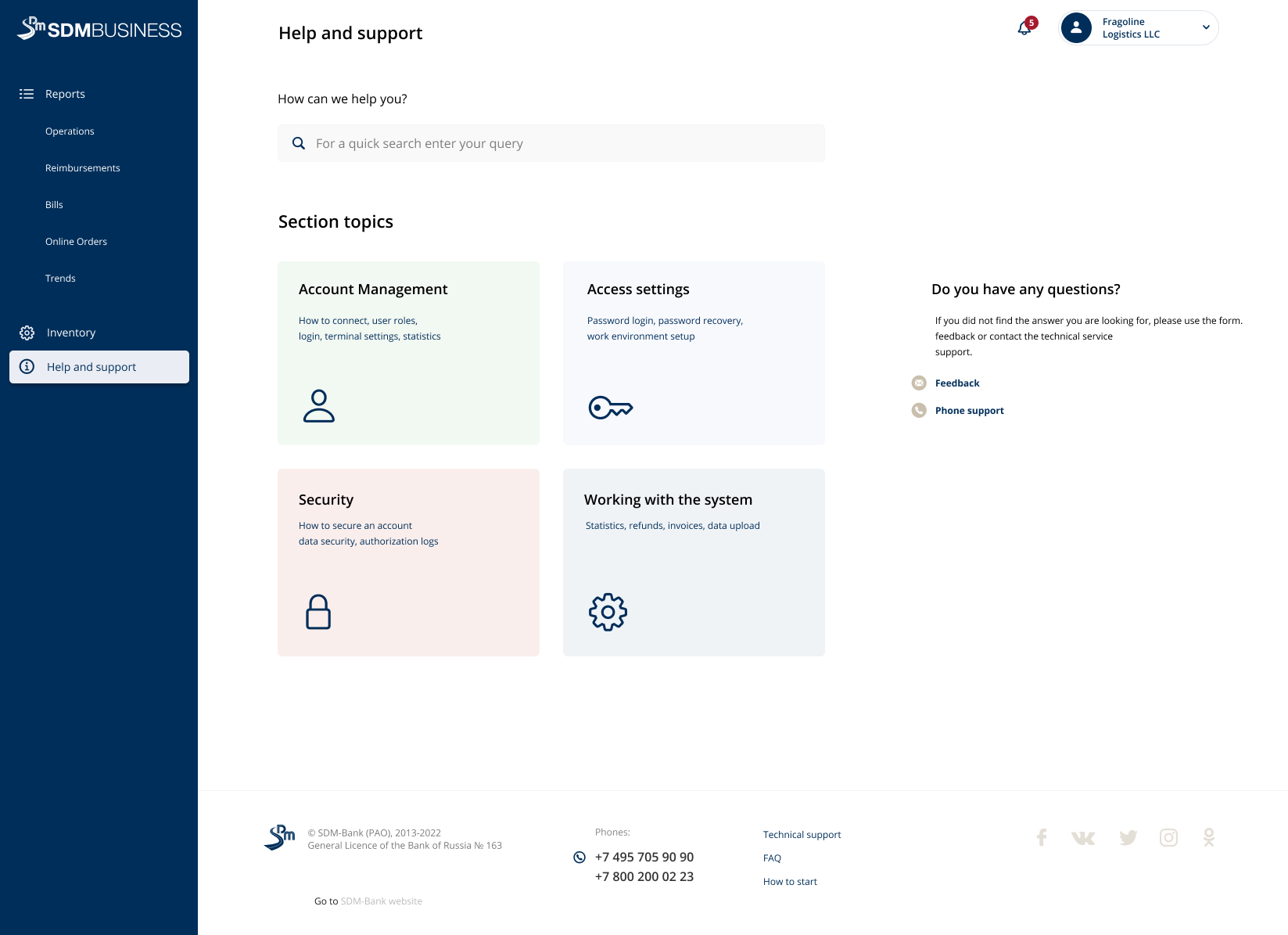
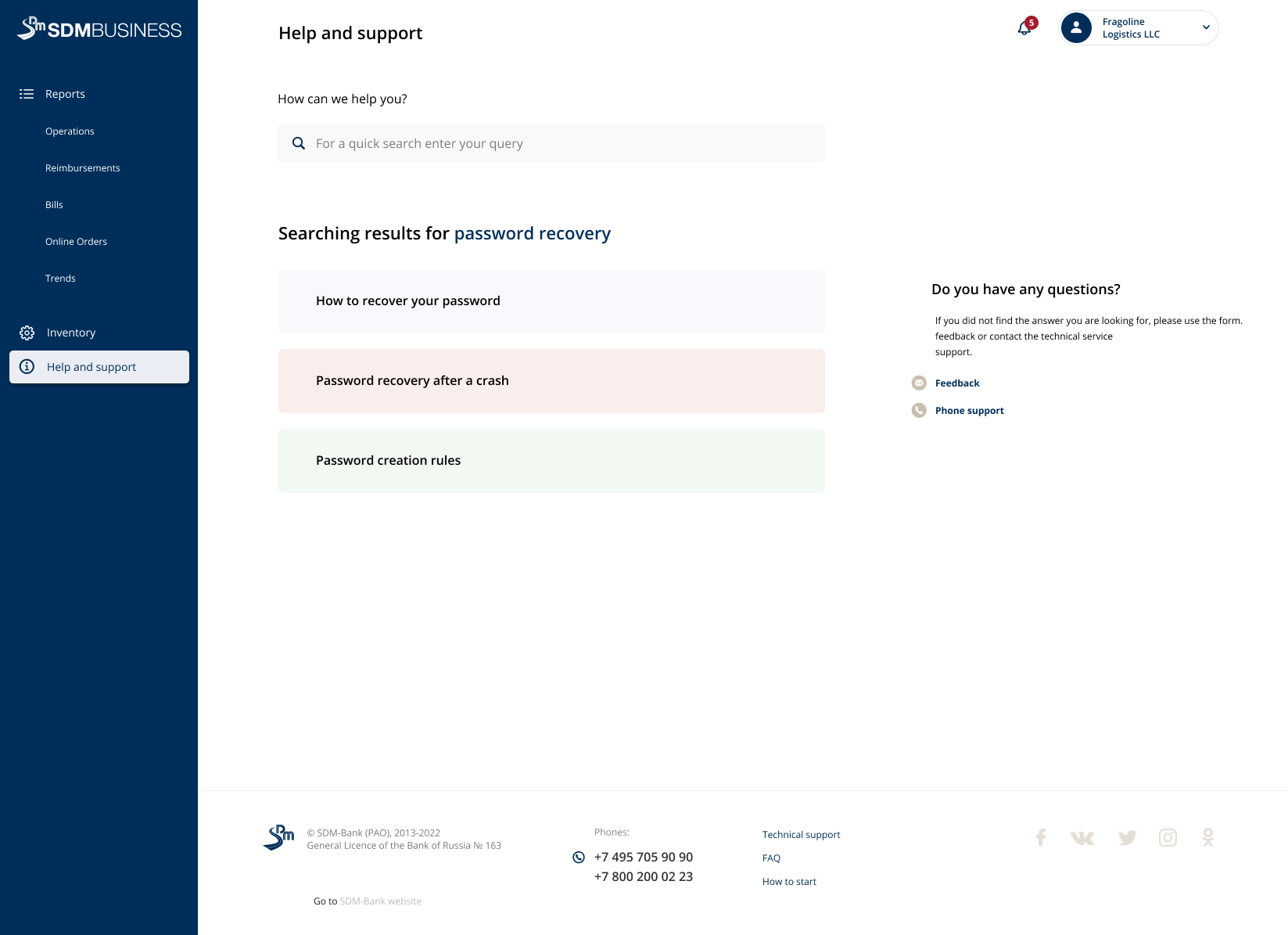
In the role of Content strategist I restructured the presentation of the Help section. Old version of the Platform has unstructured topics and quote-looking search results.
New structure of the content has color-coded chapters with a three-layer hierarchy in each of them.
When a user searches for something, UI shows him relevant sub-level headlines.
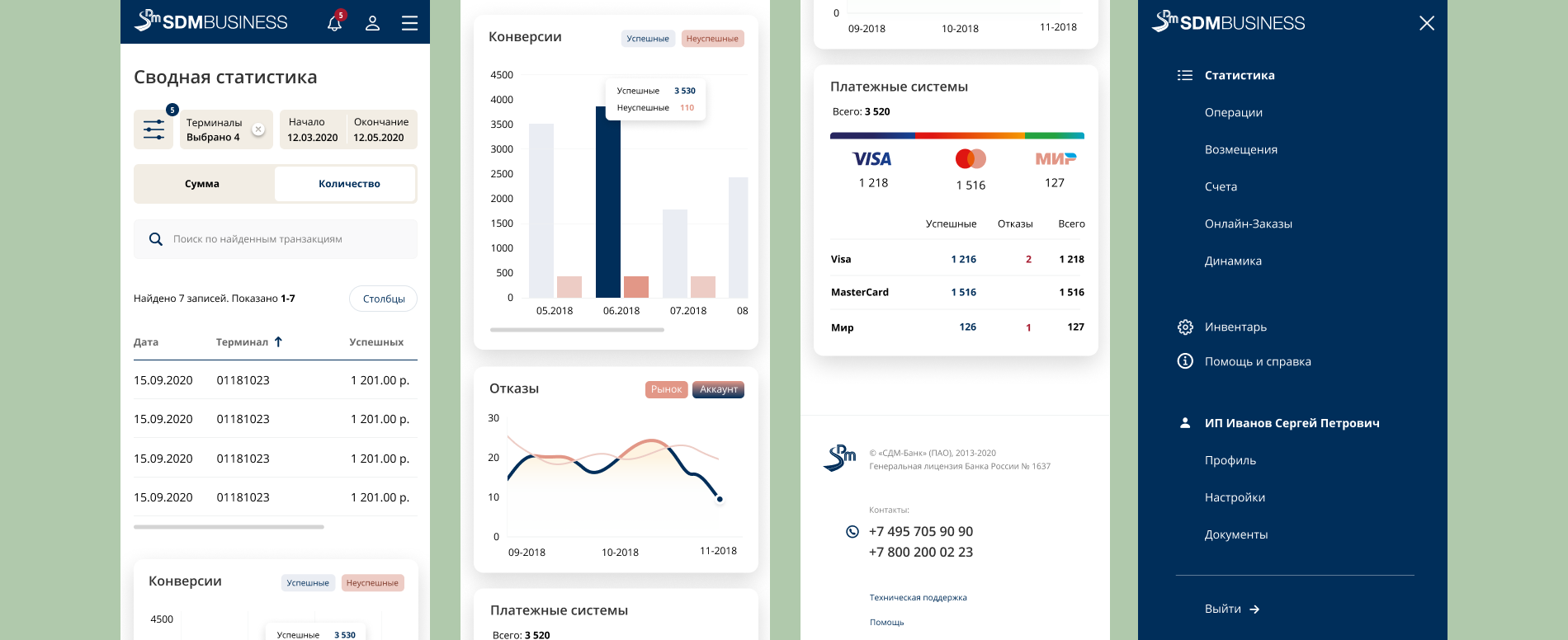
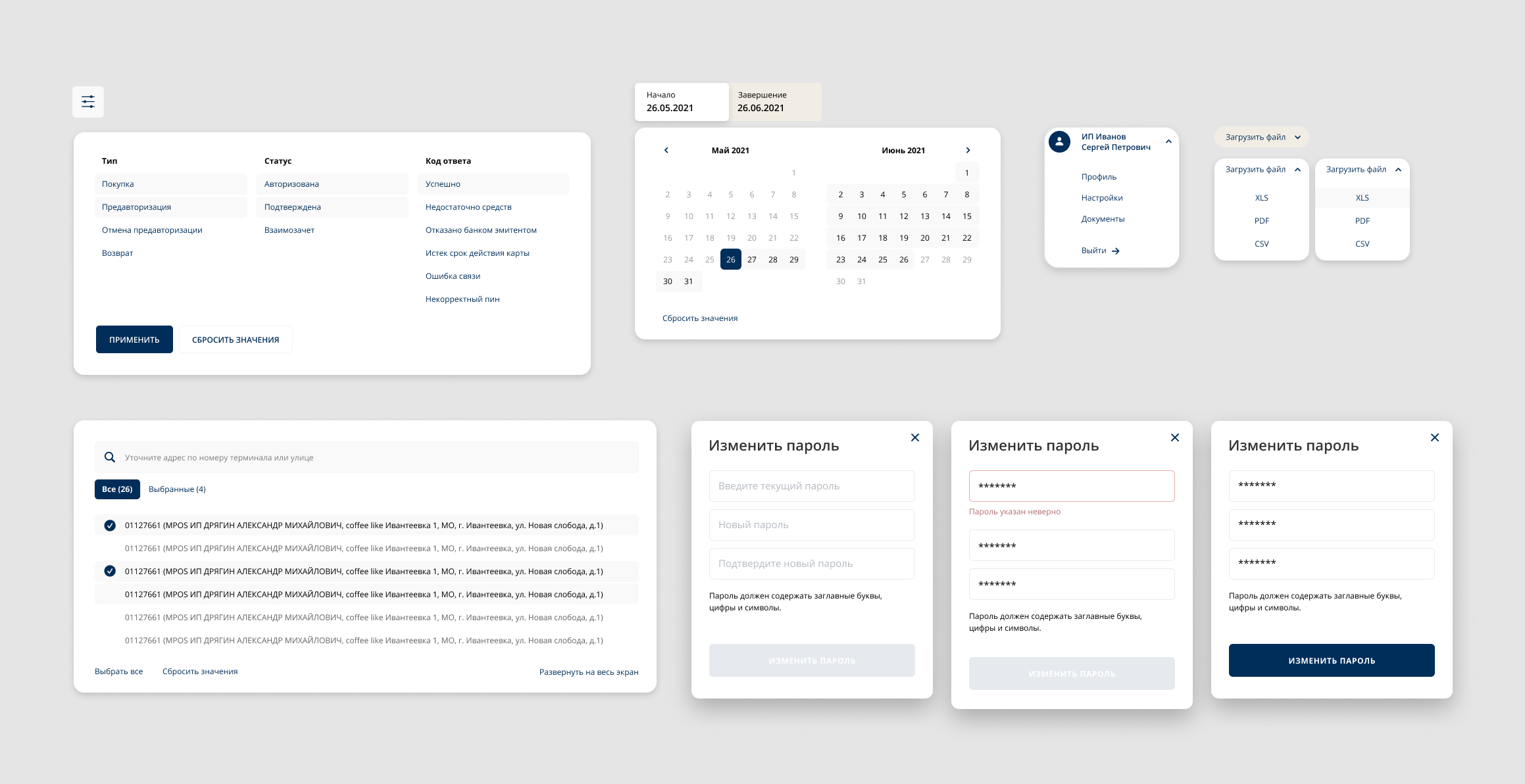
Mobile version and some elements from design system which i created
The Result
The new UI dramatically improved customer interaction with the Bank merchant data tools.
The number of customers has grown, but at the same time the number of calls to technical support has decreased by 60 percent.
The new trend comparison tool entered the top 3 popular use cases after just a week from release date.